Illusion of Control in Roulette: How It Forms

Roulette is simple on the surface: you place a bet, a number is produced, and the payout is fixed by the rules. Yet many players talk about it as if there is something to “read” — a rhythm, a pattern, the right moment to act, or a personal set of numbers that somehow “fits”. In psychology, that feeling is often described as the illusion of control: believing your actions can meaningfully influence an outcome that is fundamentally governed by chance.
What “control” really means in roulette (and what it does not)
In roulette, your decisions determine only one thing: which outcomes you are exposed to and how much you risk on each one. Choosing red instead of black changes the probability of winning that particular bet, and choosing an outside bet instead of a straight-up changes volatility. But those choices do not steer the wheel itself, nor do they “pull” the next number in your direction. That difference — selecting risk versus influencing the result — is where many misunderstandings begin.
The mathematics of roulette reinforces this point. The house advantage is built into the payout structure, so it does not disappear because you feel confident, because you wait for “the right moment”, or because you follow a sequence. On a European (single-zero) wheel the long-run edge is lower than on American (double-zero) roulette, and triple-zero variants are higher again, but in every case the game remains negative expectation over time. You can change how swingy the ride is, not the fact that the ride is priced against you.
This is why “I can choose” is not the same as “I can control”. You do have real agency — you can manage stake size, pick bet types, stop early, or avoid high-edge variants. Those decisions are meaningful because they affect your bankroll’s exposure and your session length. The illusion starts when that genuine agency over exposure is misread as agency over the outcome itself.
Why the brain over-credits our actions
Human learning is built to link actions to results. In everyday life that works well: a repeated behaviour often produces a repeated consequence. Roulette looks similar on the surface — you act (place chips), you get immediate feedback (win or loss), and your brain automatically searches for what you “did right” or “did wrong”. The problem is that roulette feedback is noisy by design, so the brain can build a story of cause and effect where none exists.
Choice itself also changes how people feel. When you pick a number, select a table, or decide on timing, it can feel like ownership — and ownership can feel like power. That sensation is persuasive precisely because it is emotionally real, even if it is statistically irrelevant. In practical terms: “my number” feels more controllable than “a number”, despite identical odds.
Memory adds another distortion. A win that follows a “special” decision — switching numbers, increasing the stake, delaying the bet — becomes vivid and easy to recall. Ordinary losses are less memorable, so they fade into the background. Over time, your personal highlight reel can make control-beliefs feel supported by experience, even when a complete record would show ordinary randomness.
How roulette environments manufacture the feeling of influence
The illusion of control is strengthened by cues in the environment. In land-based roulette, the physical ritual of selecting chips, placing them precisely, and watching the ball creates a hands-on, skill-like texture. Social cues amplify it further: comments from other players, a dealer’s pace, or the idea of a “lucky seat” can make the session feel like a performance where your choices shape the story.
Near-misses are one of the strongest psychological hooks. If the ball lands one pocket away from your number, it feels like you were “close”, even though “close” has no predictive power for the next independent spin. That feeling can be powerful enough to trigger a behavioural response: players often adjust bets towards near-miss numbers, treating “almost” as if it contains information.
Online roulette can intensify control cues because interface design can focus attention on them: quick re-bets, speed controls, streak displays, “favourite numbers”, and highly visible win animations. By 2026, the UK market is also shaped by rules aimed at reducing high-intensity play and misleading control cues, including restrictions introduced in 2025 that removed features like autoplay and limited very fast game cycles in online casino products. Even if a feature is permitted in some regions, the key point remains: anything that makes you feel you can “time” or “nudge” results is exactly the kind of cue that feeds the illusion.
The “system” trap: when structure looks like skill
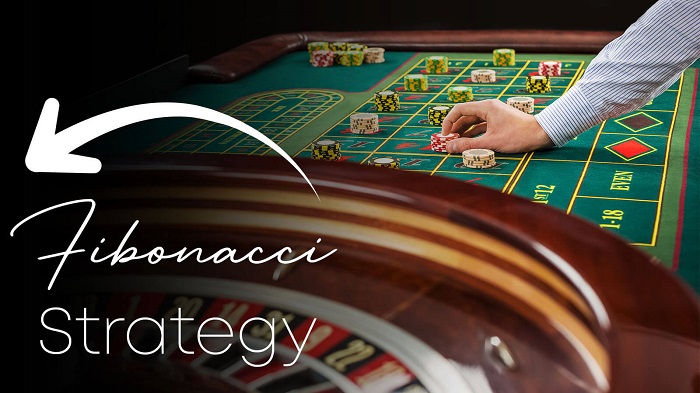
Betting progressions are a classic way the illusion turns into a plan. A sequence feels disciplined: increase after a loss, drop after a win, or chase a target profit. The structure looks like skill because it is organised. But it is still only a method for changing stake sizes under uncertainty — it cannot change the probability of the next spin landing on red, or on a particular number.
Another trap is the gambler’s fallacy: the belief that after a long run of one result, the opposite is “due”. A streak of black can make red feel increasingly “likely”, even though each spin is independent. Streaks stand out to attention, so the brain treats them as meaningful signals. Once you feel a result is “due”, you have already shifted from probability thinking into story thinking.
There is also a “hot hand” version of the same mistake: believing you have found a personal rhythm — the right table, pace, or moment to place bets. These beliefs are sticky because they are hard to disprove in your mind. When you win, it confirms the rhythm. When you lose, it can be rationalised as “slightly off timing” rather than a normal outcome of chance.

How to reduce the illusion (and protect yourself) in 2026
A useful starting point is to treat roulette as a pricing problem, not a prediction problem. You are paying for entertainment time, not purchasing an edge. Before you play, set a budget that you can afford to lose and decide what “stopping” looks like in concrete terms: a time limit, a loss limit, or a number of spins. Those boundaries matter because the illusion of control becomes most persuasive when emotions are running high.
Build friction into your session on purpose. Faster cycles and repeated re-bets encourage automatic play, which makes it easier for control stories to take over. If you play online, avoid habits that mimic “intervention” (for example, repeatedly stopping spins or rapidly changing bets). If you play in-person, step away from the table at scheduled intervals rather than waiting for a “good moment”, because waiting for a moment is often the illusion speaking.
Keep a simple session log. Note the date, time played, approximate number of spins, stake range, and net result. You do not need perfect detail; you need enough to counter selective memory. A short record makes it harder to maintain the belief that a personal ritual “always works” when the overall pattern is simply variance.
When “tools” matter more than willpower
When the illusion of control starts driving risky behaviour, willpower alone is often unreliable — especially after losses, when the urge to “fix it” is strongest. In that moment, the mind searches for a repair strategy: a new number, a bigger stake, a tighter system. Instead of debating the urge at the table, treat it as a stop-signal: end the session and step away.
If you need stronger boundaries, use formal tools rather than informal promises. In Great Britain, the main national route is self-exclusion via GAMSTOP for online operators licensed in Great Britain. Many operators also provide deposit limits, loss limits, time-outs, and reality checks. These tools are practical because they reduce the number of decisions you have to win in the heat of the moment.
Finally, recognise the most honest kind of “control” roulette allows: control over participation. You can choose to play slower, choose lower-volatility bets, avoid high-edge versions, and stop earlier than your emotions want. That is real, protective control. Anything that feels like controlling the next number is a psychological mirage — and the safest way to handle a mirage is to stop walking towards it.